
How to Search Civil Dockets
Start with Indiana MyCase. An exact civil case number is the best key. Without one, use the Name tab for a person or the Business field for a company, pick the Civil category, and narrow the court, status, or filing dates. Newton Circuit Court carries code 56C01. Newton Superior Court carries 56D01. When you cannot tell which court took the case, search both codes.
The online portal is not the whole story. Indiana Court Calendar lists current public settings, and the Newton County Clerk of the Circuit Court at 219-474-6081 can supply missing or certified records. Walk-in service is at 201 N. Third Street in Kentland during county office hours. Mail a request to PO Box 49, Kentland, IN 47951 naming the court, case number, exact document, date, copy type, and return contact. Newton posts no civil copy form and promises no turnaround time.
- Choose Case search when a full number is available.
- Otherwise choose Name and enter a person or business, not both.
- Select Civil and the likely Newton court.
- Open only a result that matches the court, type, filing date, and parties.
- Read the chronology, newest settings, status, and linked documents.
- Request the exact missing or certified item from the Clerk.
Search Both Newton Civil Codes
Newton County Local Rule 56-15 controls. It assigns Circuit Court several named civil categories: collection, protective orders, small claims, adoption, reciprocal support, domestic relations, juvenile, and eviction matters. Everything else can land in either Circuit or Superior Court. The judges review new filings quarterly. That review keeps the split even. So a broad label like “civil” cannot tell you which Newton court holds the docket.
| Newton court | Code | Likely civil work |
|---|---|---|
| Newton Circuit Court | 56C01 | Named collection, small-claims, eviction, family, protective, adoption, support, and juvenile allocations |
| Newton Superior Court | 56D01 | Other civil matters when allocated or filed there |
| Newton County Clerk | Unified custodian | CCS records, public filings, copies, and help locating either court |
A party-name search that comes back thin deserves a second pass. Run it again under the other court code. Then recheck the spelling, status, and date filters. Then call the Clerk. An empty result never proves the civil record does not exist.
What a Civil Docket Shows
Every Newton County civil docket rests on Indiana’s chronological case summary, the CCS. It is a dated register of events. A public MyCase result can show a great deal. You may see the court, case number, filing date, civil case type, caption, status, parties and their roles, attorneys, the chronology, settings, selected documents, financial entries, disposition, legacy cross-references, and appeal activity. Some contact fields may show where public. Do not copy or republish those without a good reason.
| Case number | The local court, filing period, type, and sequence, such as 56C01-1005-CT-000004. |
|---|---|
| Parties | Plaintiff, defendant, petitioner, respondent, counsel, and public bar numbers. |
| Filings | Complaint or petition, answer, appearances, service events, notices, and motions. |
| Settings | Conference, hearing, trial, and post-judgment dates, including historical settings. |
| Documents | Public order or filing links with title, page count, and file type when available. |
| Result | Status, judgment, dismissal, appeal, or post-judgment entries read in context. |
Treat the pieces with care. A financial summary can be incomplete or stale, and a document link may appear for one event but not another. A missing online image does not mean the clerk lacks the filed paper.
The Newton 56C01 Tort Sample
One Newton Circuit Court tort case shows what a long civil record looks like. It is 56C01-1005-CT-000004, typed “CT - Civil Tort.” The trail runs from complaint and jury demand onward. It moves through appearances, answers, motions, case management, final pretrial, jury trial, appeal activity, proceedings supplemental, and release of judgment. No private party facts belong here.
The record also carries converted events and a legacy cross-reference, and those labels matter. Newton’s courts entered Odyssey on December 2, 2019, so older activity may have been migrated. “Converted Event” describes the data transfer only. It does not fix the legal meaning or date of the underlying act. The newest status line alone never tells the whole story.
Note: Read each Newton civil event by date and description. Verify any critical result in the public order or the clerk-held record.
Types of Civil Cases on the Docket
A Newton County civil docket reaches beyond ordinary damages claims. MyCase’s Civil category can return civil tort, civil plenary, small-claims, protective, and related records. Family and juvenile matters may run separately. They have their own search limits. Local allocation also routes key matters to Circuit Court.
- Civil tort and civil plenary claims
- Collections and proceedings to enforce judgments
- Small claims and eviction matters
- Domestic relations and reciprocal support
- Protective-order and adoption matters
- Juvenile records, subject to strict access limits
Case type shapes both the court assignment and what the public can see. Protection-order name searches and juvenile materials may be limited. Search by exact case number when that is lawful and available, and use the official access route rather than assuming a missing name means no filing.
Newton Civil Filing Goes Digital
Indiana’s e-filing manager connects approved providers to Odyssey or another court case-management system. Attorneys must file electronically in covered case types. Self-represented parties are encouraged but generally not required to e-file. The filing service delivers documents and notices into the court system. Yet it is not the public docket viewer. Public readers use MyCase.
The official Indiana e-filing workflow lays out that process step by step.
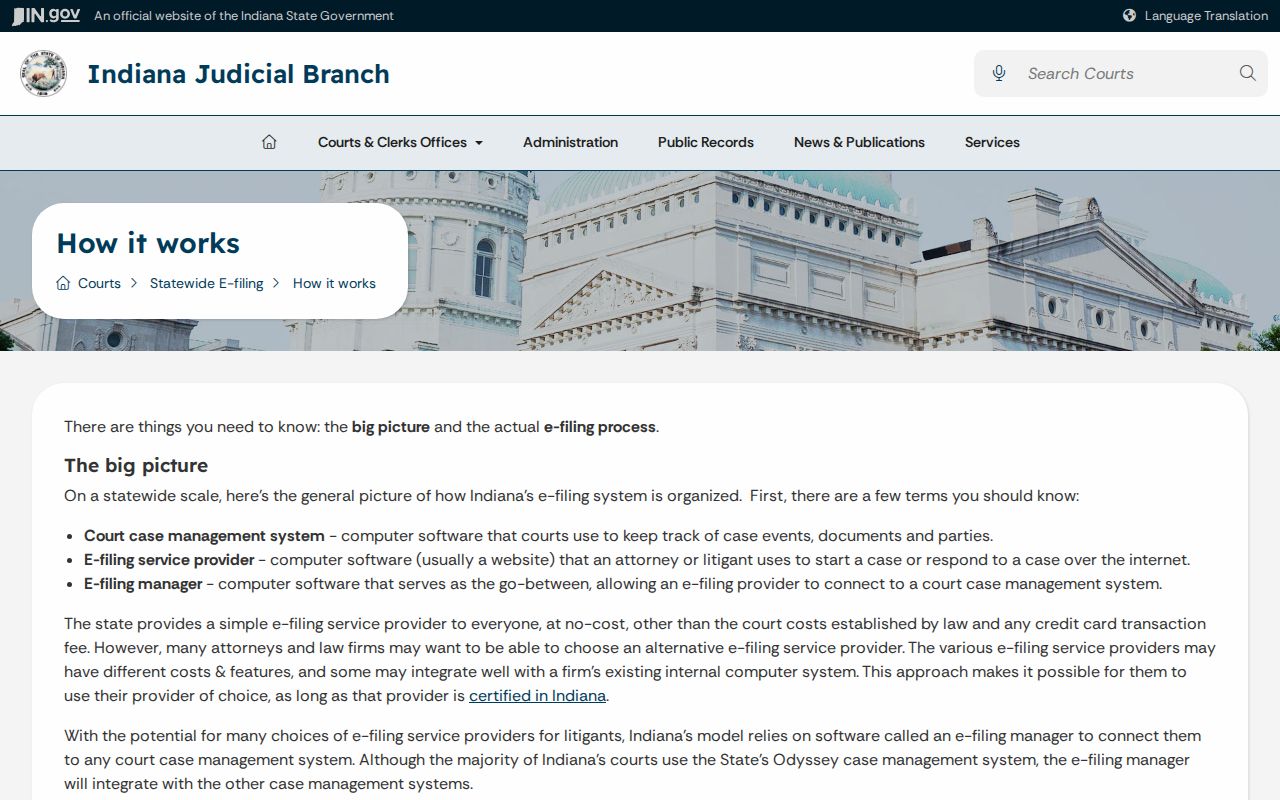
That split explains the difference. An e-file confirmation submits material, while a public Newton County civil docket reports case activity only after the court system processes it. Indiana’s uniform case-number rule supplies the structure behind local numbers.
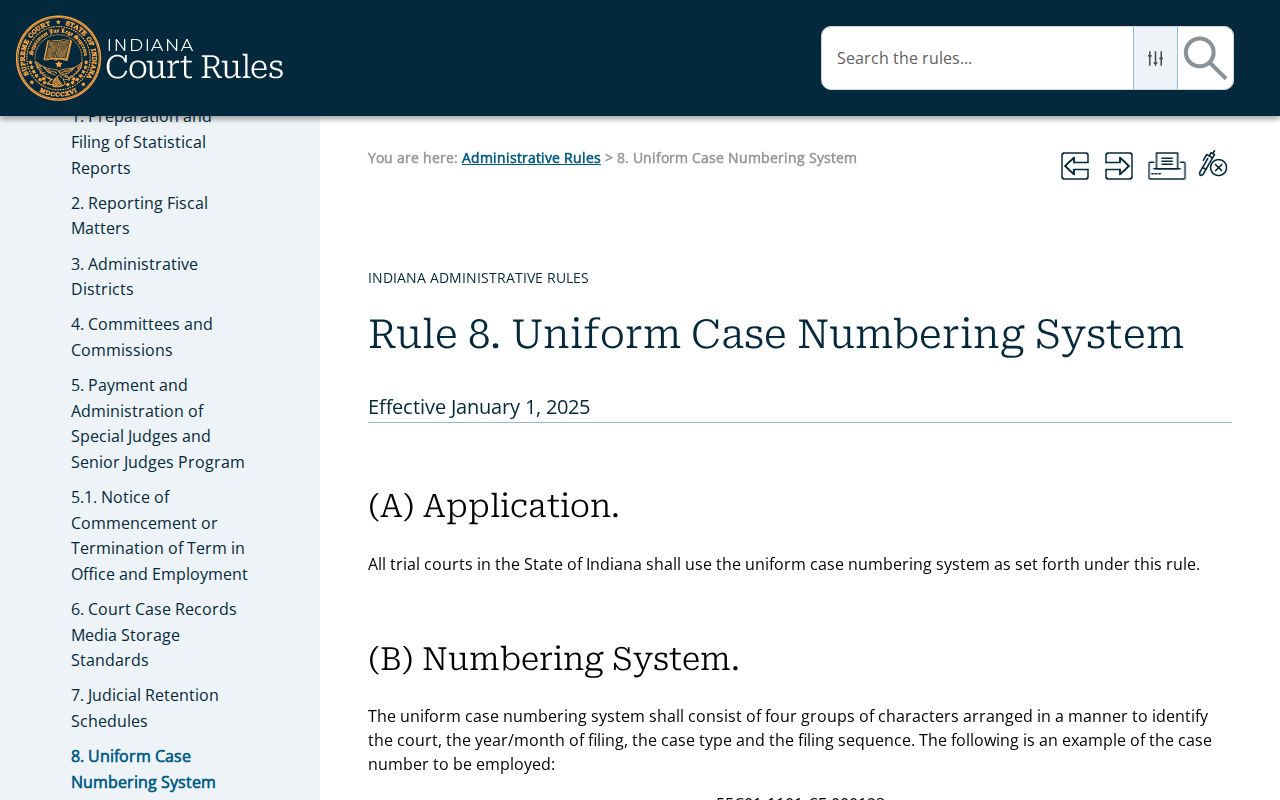
The 56C01 or 56D01 prefix identifies the Newton court. The later parts identify the filing period, case type, and sequence.
Settings and Hearings on Civil Dockets
Old and new settings can pile up on a Newton County civil docket. The codes tell you which is which. Expect Final Pretrial Conference PT, Jury Trial JT, Hearing HR, and Proceedings Supplemental PS. A setting may list a date, a time, and a judge. Read a calendar line as a schedule only. It never proves the hearing happened or tells you the outcome.
Local rules shape the timing of these entries. Newton requires a case-management conference in civil plenary and tort matters once answers come in. It must come no more than 90 days after the complaint unless default applies. A case headed to trial gets a final pretrial conference. It sits no more than 30 days before trial. That framework explains why conference and trial settings line up the way they do. Still, no single case is promised its date.
- PT
- Final pretrial conference observed in the Newton civil sample.
- JT
- Jury trial setting.
- HR
- General hearing label.
- PS
- Proceedings supplemental hearing, often tied to post-judgment enforcement.
Start with the newest order, MyCase settings, and the Court Calendar. If a Circuit Court date does not appear in the calendar selector, call 219-474-5131; Superior Court can be reached at 219-474-5569.
Newton Civil Forms and Documents
Some civil event rows carry a free public document link. The row names the document, its page count, and file type. A download action sits there too. Orders and filings appear this way often. Coverage shifts with date, case type, conversion, confidentiality, and upload practice. Remember that a docket label is not the filed paper itself.
Need official civil forms? The Indiana court forms index collects the state's civil and related templates.
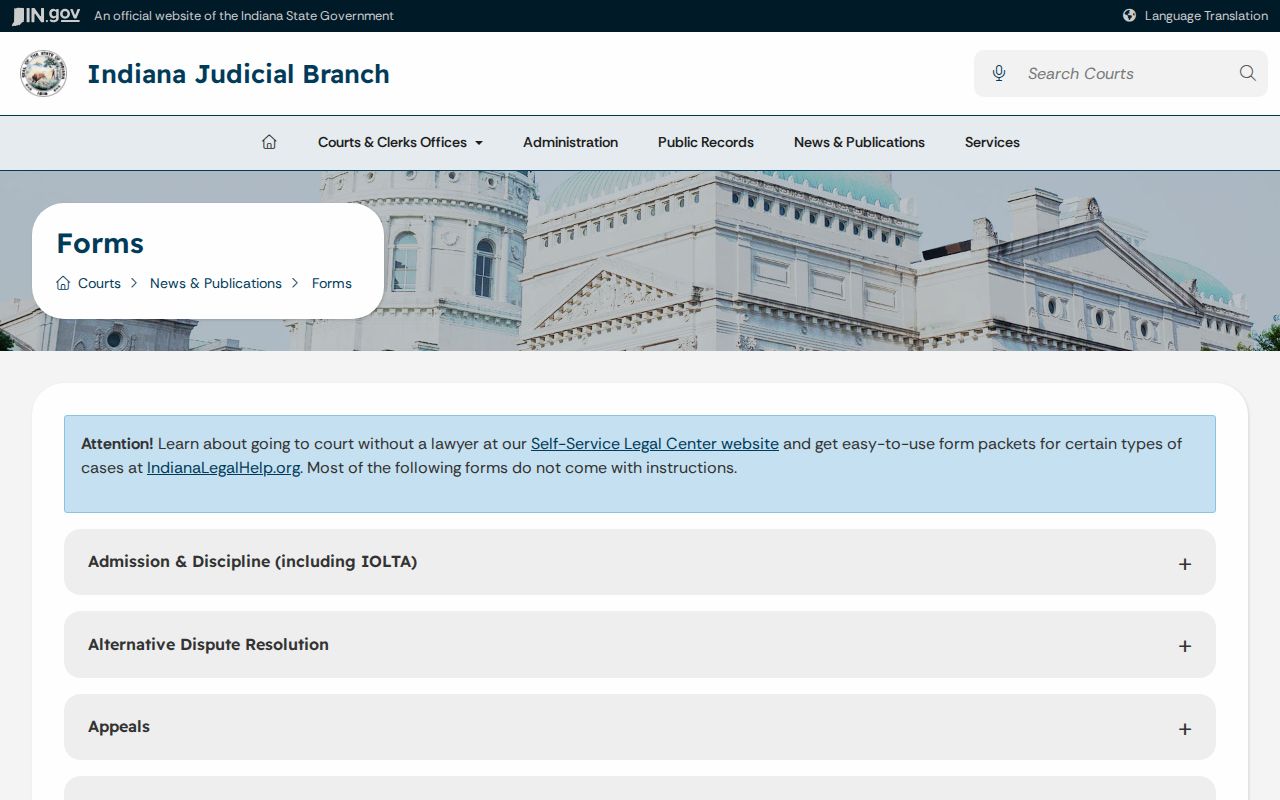
A blank form fills no copy request. It also says nothing about what a Newton case actually holds. Scan the event list first. Pin down the exact order, motion, judgment, or notice you need. Then ask the Clerk for a public or certified copy whenever no link shows up.
Public Access to Civil Dockets
Indiana opens court records to the public by default. Indiana Access Rule 4 sets that baseline for every court record. It applies unless a record falls under an exclusion. Access Rule 5 lists what stays shielded. The shield covers entire cases, single documents, personal identifiers, certain juvenile and child information, victim or witness details, mental-health material, and anything sealed. So a Newton County civil docket for family, juvenile, adoption, or protective matters may display far less than an ordinary tort case would.
When the online docket comes up short, the clerk still takes requests at the counter, by phone, or by mail. Be reasonably particular about what you need. That means the court code, the case number, a document title or event date, and the copy type. The local rule limits faxed pleadings. That rule alone does not promise the clerk will accept a records order by fax.
Access rules:
Access Rule 9 provides a verified request, notice, and possible hearing route for an excluded court record.
Administrative Rule 9 governs remote and local court-record access.
Indiana Code 5-14-3 covers public-agency requests but does not override judicial confidentiality.
Certified copies: a browser printout of the docket will not do. Before you budget anything, ask the Newton County Clerk about page count, certification, seal, accepted payment, and delivery.
After Judgment on Newton Dockets
A Newton County civil docket does not stop at judgment. The sample here showed proceedings supplemental plus a release of judgment. Proceedings supplemental are enforcement steps after judgment, not a fresh ruling on the claim itself. An appeal may surface too. Watch for a notice, a clerk completion entry, a transcript request, or Court of Appeals activity.
Want the judgment itself? Check the public event first for a linked document. If the link is missing, call the Clerk with the case, judgment date, and copy type. Do the same when you need certification. State fees run $1 per legal or letter page and $1 for a seal certificate. Confirm the full Newton total and payment method with the Clerk directly.
Note: the status line is a locator only. A Newton civil status line never stands in for the judgment, the appeal record, or the full chronological case summary.